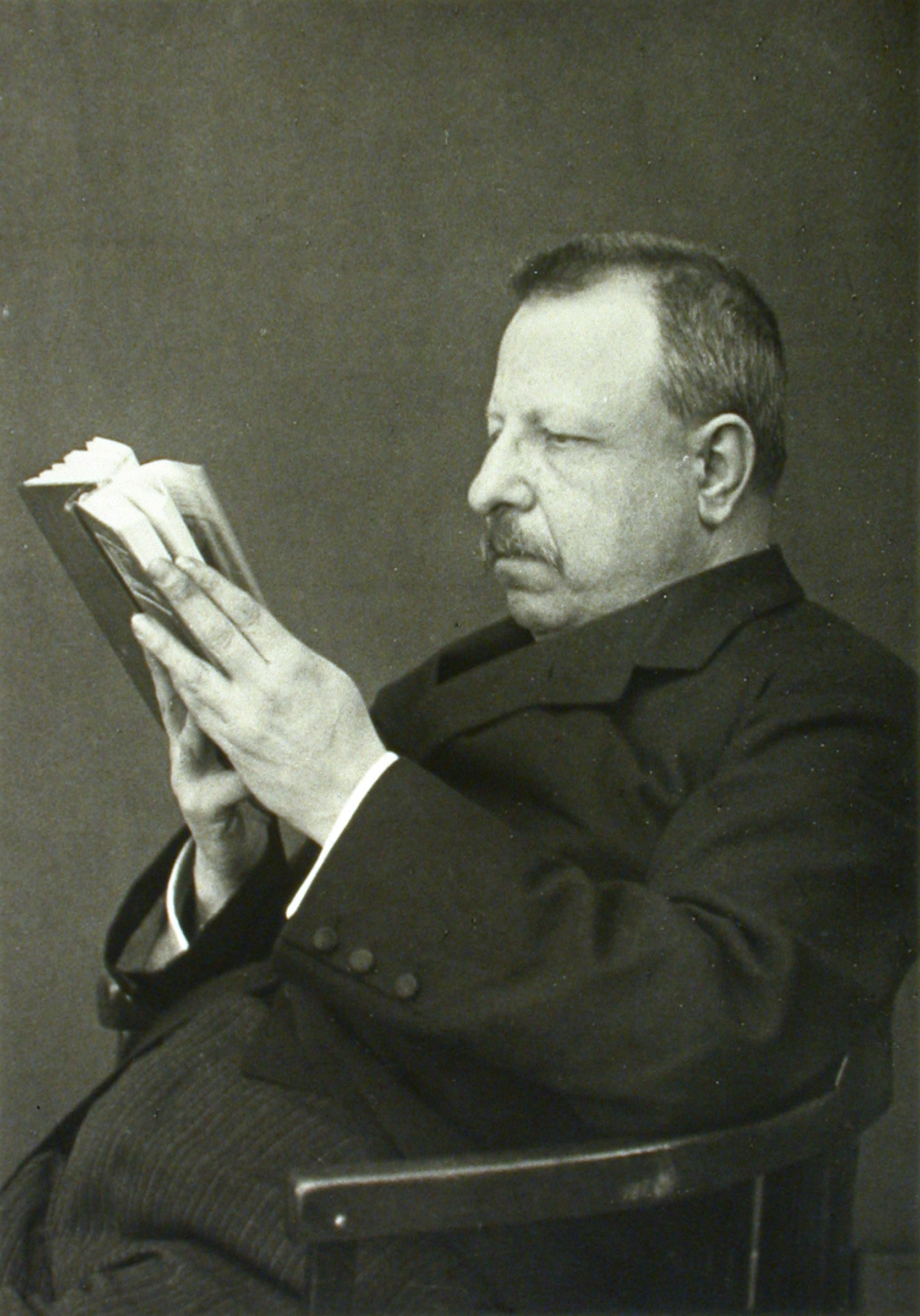
Benedetto Croce (1866–1952) was an Italian philosopher, historian, literary critic, and statesman, and one of the central figures of European intellectual life in the first half of the twentieth century. Together with Giovanni Gentile, he played a decisive role in the revival of philosophical idealism in modern Italy, although their intellectual and political paths later diverged profoundly. Croce’s philosophy of spirit gave aesthetics a fundamental place within human activity, defining art as intuition and expression and profoundly influencing modern literary criticism. His major works include “Aesthetic as Science of Expression and General Linguistic”, “Logic, Philosophy of the Practical”, “History of the Kingdom of Naples”, “History of Italy from 1871 to 1915”, and “History of Europe in the Nineteenth Century”. In 1903 he founded the influential journal “La Critica”, which he directed for four decades. A senator and former Minister of Public Education, Croce became one of the most authoritative liberal opponents of Fascism and in 1925 issued the “Manifesto of the Anti-Fascist Intellectuals” in response to Giovanni Gentile’s Fascist manifesto. After the fall of the regime, he again took part in Italian political life and in 1946 founded the Italian Institute for Historical Studies in Naples.
HoleniaBooks
Italian Literature
The Poetry of Dante
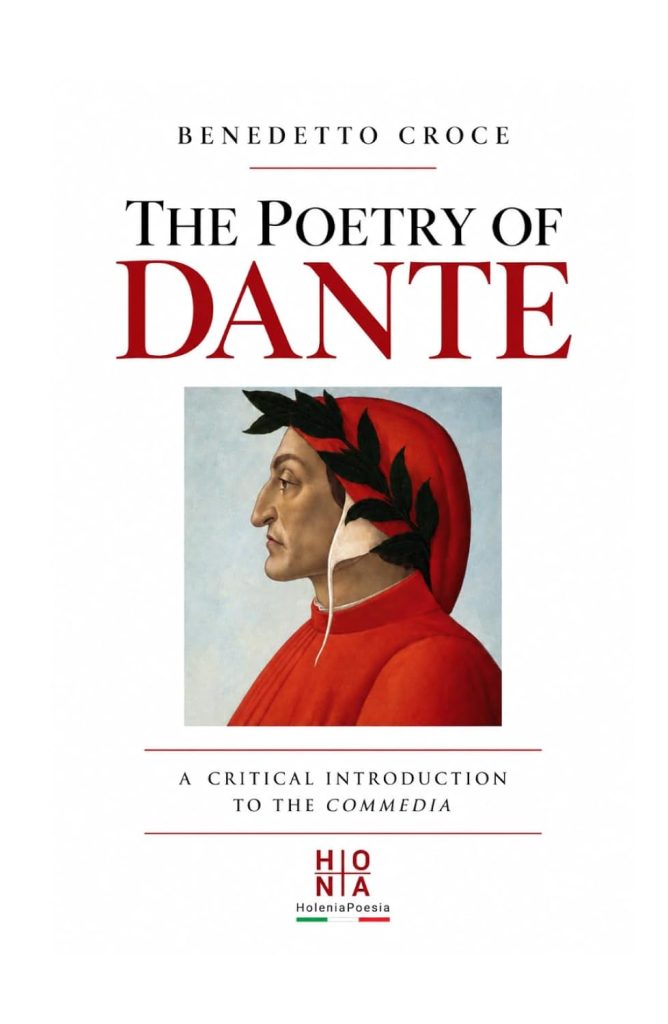
What makes Dante’s Commedia poetry? In “The Poetry of Dante”, Benedetto Croce—one of the most influential European philosophers and literary critics of the twentieth century—poses that question with a rigor that transformed modern Dante criticism. Rather than treating the “Commedia” primarily as a theological system, a political document, an allegorical code, or an encyclopedia of medieval knowledge, Croce returns attention to Dante as poet. Historical scholarship, philosophy, theology, biography, and philology remain necessary, but they cannot by themselves explain the imaginative power of Francesca and Farinata, Ulysses and Ugolino, Casella and Sordello, Piccarda, Cacciaguida, Matelda, and Beatrice. For Croce, such figures live because intellectual and historical material has been transformed into image, rhythm, voice, and feeling. At the center of the book lies Croce’s celebrated—and controversial—distinction between “structure” and “poetry.” The vast architecture of the “Commedia”, with its moral classifications, punishments and rewards, cosmology, prophecies, doctrinal explanations, and allegorical correspondences, provides the framework of Dante’s journey; yet the poem’s enduring greatness emerges wherever this material becomes fully realized poetic expression. Moving through the “Inferno”, “Purgatorio”, and “Paradiso”, Croce challenges the traditional assumption that the first cantica is necessarily the most poetic. Violence, despair, and tragic passion are not the only materials of poetry: tenderness, serenity, faith, intellectual joy, contemplation, humor, and mystical exaltation can be equally powerful when transformed by the imagination. The volume concludes with a major essay on the history of Dante criticism, from the earliest commentators through Vico, Romanticism, De Sanctis, and Vossler, placing Croce’s own interpretation within a centuries-long debate over how Dante should be read. First published in the early twentieth century, “The Poetry of Dante” remains both a landmark of Italian criticism and a provocative meditation on the nature of literature itself. This English edition introduces Croce’s argument to a new generation of readers and restores to the center of Dante studies a question that has never ceased to matter: after history, theology, politics, and scholarship have said all they can say, what is it that makes a poem poetry?
Visualizza il libro